One of Germany’s most famous composers is Richard Wagner (1813-1883), who is especially famous for his operas. In fact, Wagner even built his very own opera house, called the Bayreuth Festspielhaus, which was dedicated to his own works.
And to this day, we celebrate the life and works of Wagner with an annual music festival held in Bayreuth, Germany. Wagner fans from all over the world travel to the Festspielhaus to attend the annual event—including Chancellor Angela Merkel.
This week, the Chancellor and Bavarian CSU Leader Markus Söder attended the music festival, despite sweltering hot temperatures in Germany. Merkel is a long-time Wagner fan, and has attended the annual event several times.
Since its launch in 1876, the Bayreuth Festival has been a socio-cultural phenomenon, with notable guests including Kaiser Wilhelm, Dom Pedro II of Brazil, King Ludwig, Friedrich Nietzsche and countless other fans of Wagner’s compositions. The Bayreuther Festspiele kicked off on July 25 and will continue until August 28.
Nicole Glass, Editor, The Week in Germany
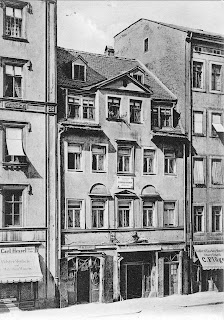
Wagner was born in Leipzig, Germany's secret cultural capital, in the house below, Am Brühl, a major city street. Read more about it in our book Leipzig! One Thousand Years of German History. Also as an ebook.
As always, signe up for our newsletter and get a free ebook!
And to this day, we celebrate the life and works of Wagner with an annual music festival held in Bayreuth, Germany. Wagner fans from all over the world travel to the Festspielhaus to attend the annual event—including Chancellor Angela Merkel.
This week, the Chancellor and Bavarian CSU Leader Markus Söder attended the music festival, despite sweltering hot temperatures in Germany. Merkel is a long-time Wagner fan, and has attended the annual event several times.
Since its launch in 1876, the Bayreuth Festival has been a socio-cultural phenomenon, with notable guests including Kaiser Wilhelm, Dom Pedro II of Brazil, King Ludwig, Friedrich Nietzsche and countless other fans of Wagner’s compositions. The Bayreuther Festspiele kicked off on July 25 and will continue until August 28.
Nicole Glass, Editor, The Week in Germany
Wagner was born in Leipzig, Germany's secret cultural capital, in the house below, Am Brühl, a major city street. Read more about it in our book Leipzig! One Thousand Years of German History. Also as an ebook.
As always, signe up for our newsletter and get a free ebook!